
Abercrombie & Fitch

I reduced returns by creating a better size guide experience.

Having a lot of fit information means nothing if your customers can't find it. Our challenge was to improve the discoverability of our fit information on our product pages, since many customers expressed a lack of confidence in the size they selected, despite the amount of fit information on our site.

The result: A dedicated size guide hub that created a statistically significant improvement in RPV and reduced returns in categories over time.

See Live Design

UX Research

Product Design

Role

Lead UX Designer

Timeline

8 Weeks

Team

1 UX Designer

1 Product Manager

Scrum Team
The Problem

Despite the amount of fit information on the site, customers still stated they lacked confidence in picking their size. 

I conducted a site audit and discovered that all our relevant size information, from model measurements, size guide, and rating and reviews, were all located in separate areas on the page, requiring a customer to discover each one individually.

The complexity and the diversity of the garments resulted in this inconsistent placement of information across the page.

After working closely with product, developers, and merchandise teams, I discovered that size information became available at different times, and some fabrics have different information than others, which caused this discrepancy.

Knowing this, we worked together to create design strategies that attempted to target each issue.

Discoverable

How might we make current fit information easier to find? 

Consolidated

How might we consolidate our fit information?

Consistent

How might we present our fit information in a consistent way? 

Contextually Relevant 

How might we provide relevant fit info across our varied products?

Relatable

How might we help customers understand our fit information in the way that is personal? 

Ideation & Testing

I focused the next few weeks on discoverability and ensuring information was consolidated and higher up on the page.

My team and I decided to focus on this since other issues could be solved later once we confirmed size information was being found.

To test designs, we conducted click & time on task tests to measure their success.

From these tests, we found that people expected a lot of information to be in size guide that might not be there currently, despite the information being visible on other parts of the page. 

Where might you go to understand the length of a jean?

73% of testers clicked the size guide.

Where might you go to understand the model’s height?

Majority of testers clicked the size guide

Where might you go to understand the length of a jean?

70% of users still clicked the size guide

The Solution

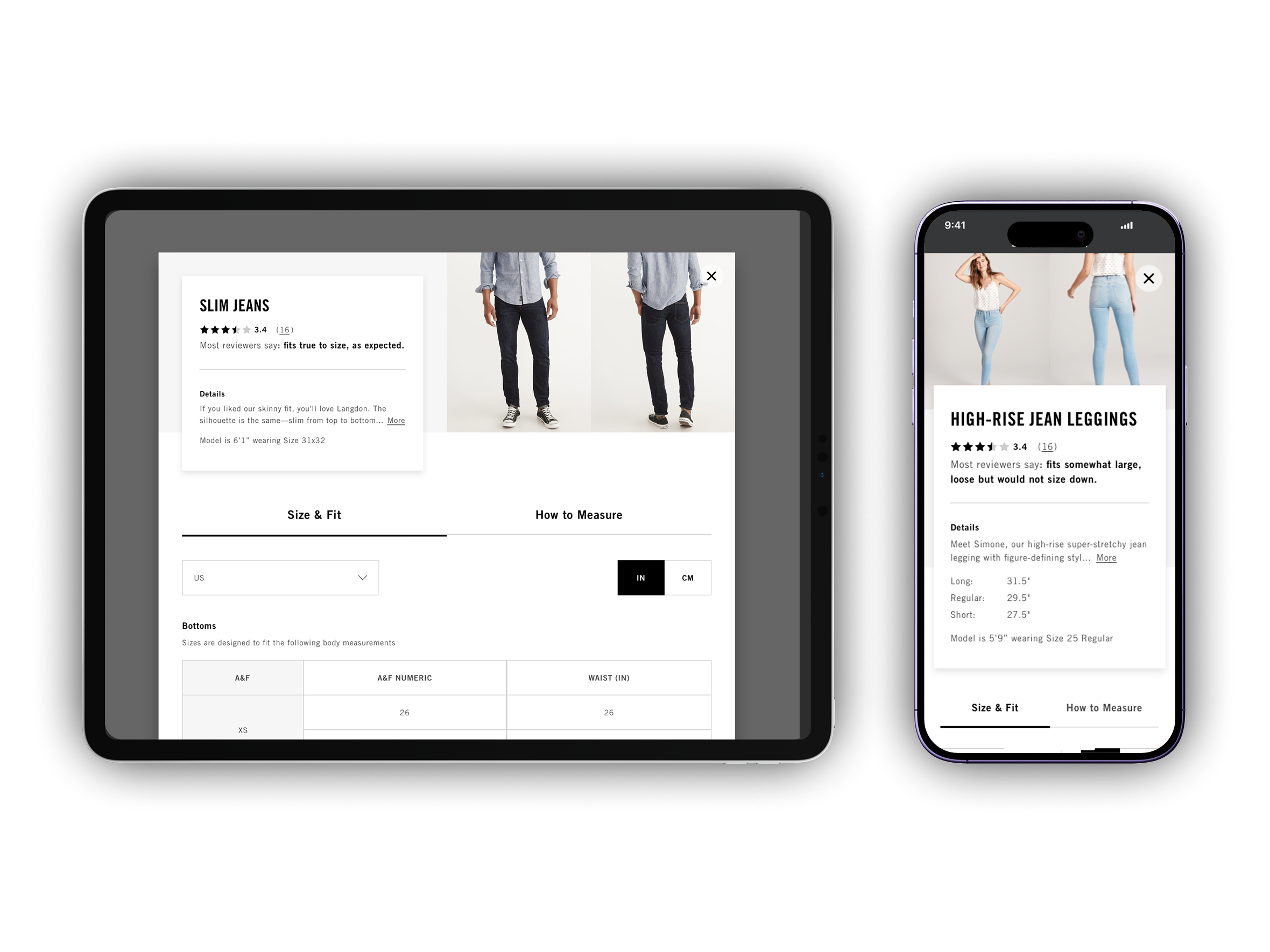
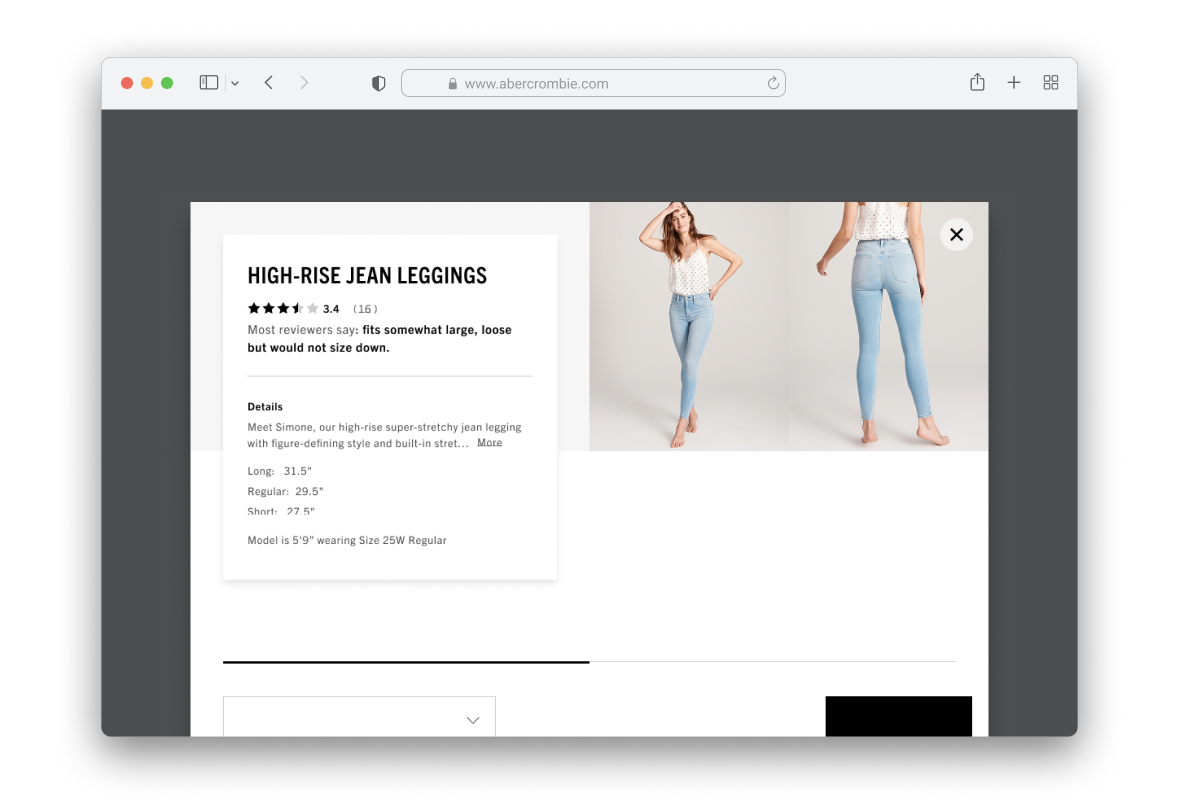
Our solution creates a "hub" for fit information, in a place customers are already expecting this information to be - the Size Guide. 

This solution also worked because it allowed each card to be dynamic based on the information we have, solving the business problem of inconsistent information across categories, and provided an easy place to add information for the future.

An image of the abercrombie size guide

A filled out size guide card, featuring all our current information.

An example of a product with limited size information.

The impact

+ RPV

A statistically significant increase in revenue per visitor

By creating this hub of information, I increased customer confidence in purchase which resulted in a larger order value per customer during the A/B test of this design

Scalability

And reduced development time

This size guide hub provides a scalable experience as the team looks to add more fit information over time, reducing development and design churn.

-Returns

Statistically significantly reduced over time

We looked at returns at high turnover categories and evaluated the return rate to measure the impact of improved size information discoverability.

I reduced bounce rates and increased AOV by 7% with a Shopify redesign.

See Work

I created the vision for a sleep expert AI chatbot for sleep deprived adults.

See Work

© Olivia Girgis 2026 All Rights Reserved

Product Design & Illustration

Abercrombie & Fitch

I reduced returns by creating a better size guide experience.

Having a lot of fit information means nothing if your customers can't find it. Our challenge was to improve the discoverability of our fit information on our product pages, since many customers expressed a lack of confidence in the size they selected, despite the amount of fit information on our site.

The result: A dedicated size guide hub that created a statistically significant improvement in RPV and reduced returns in categories over time.

See Live Design

UX Research

Product Design

Role

Lead UX Designer

Timeline

8 Weeks

Team

1 UX Designer

1 Product Manager

Scrum Team
The Problem

Despite the amount of fit information on the site, customers still stated they lacked confidence in picking their size. 

I conducted a site audit and discovered that all our relevant size information, from model measurements, size guide, and rating and reviews, were all located in separate areas on the page, requiring a customer to discover each one individually.

The complexity and the diversity of the garments resulted in this inconsistent placement of information across the page.

After working closely with product, developers, and merchandise teams, I discovered that size information became available at different times, and some fabrics have different information than others, which caused this discrepancy.

Knowing this, we worked together to create design strategies that attempted to target each issue.

Discoverable

How might we make current fit information easier to find? 

Consolidated

How might we consolidate our fit information?

Consistent

How might we present our fit information in a consistent way? 

Contextually Relevant 

How might we provide relevant fit info across our varied products?

Relatable

How might we help customers understand our fit information in the way that is personal? 

Ideation & Testing

I focused the next few weeks on discoverability and ensuring information was consolidated and higher up on the page.

My team and I decided to focus on this since other issues could be solved later once we confirmed size information was being found.

To test designs, we conducted click & time on task tests to measure their success.

From these tests, we found that people expected a lot of information to be in size guide that might not be there currently, despite the information being visible on other parts of the page. 

Where might you go to understand the length of a jean?

73% of testers clicked the size guide.

Where might you go to understand the model’s height?

Majority of testers clicked the size guide

Where might you go to understand the length of a jean?

70% of users still clicked the size guide

The Solution

Our solution creates a "hub" for fit information, in a place customers are already expecting this information to be - the Size Guide. 

This solution also worked because it allowed each card to be dynamic based on the information we have, solving the business problem of inconsistent information across categories, and provided an easy place to add information for the future.

An image of the abercrombie size guide

A filled out size guide card, featuring all our current information.

An example of a product with limited size information.

The impact

+ RPV

A statistically significant increase in revenue per visitor

By creating this hub of information, I increased customer confidence in purchase which resulted in a larger order value per customer during the A/B test of this design

Scalability

And reduced development time

This size guide hub provides a scalable experience as the team looks to add more fit information over time, reducing development and design churn.

-Returns

Statistically significantly reduced over time

We looked at returns at high turnover categories and evaluated the return rate to measure the impact of improved size information discoverability.

I reduced bounce rates and increased AOV by 7% with a Shopify redesign.

See Work

abstract painting

I created the vision for a sleep expert AI chatbot for sleep deprived adults.

See Work

© Olivia Girgis 2026 All Rights Reserved

Product Design & Illustration

Abercrombie & Fitch

I reduced returns by creating a better size guide experience.

Having a lot of fit information means nothing if your customers can't find it. Our challenge was to improve the discoverability of our fit information on our product pages, since many customers expressed a lack of confidence in the size they selected, despite the amount of fit information on our site.

The result: A dedicated size guide hub that created a statistically significant improvement in RPV and reduced returns in categories over time.

See Live Design

UX Research

Product Design

Role

Lead UX Designer

Timeline

8 Weeks

Team

1 UX Designer

1 Product Manager

Scrum Team
The Problem

Despite the amount of fit information on the site, customers still stated they lacked confidence in picking their size. 

I conducted a site audit and discovered that all our relevant size information, from model measurements, size guide, and rating and reviews, were all located in separate areas on the page, requiring a customer to discover each one individually.

The complexity and the diversity of the garments resulted in this inconsistent placement of information across the page.

After working closely with product, developers, and merchandise teams, I discovered that size information became available at different times, and some fabrics have different information than others, which caused this discrepancy.

Knowing this, we worked together to create design strategies that attempted to target each issue.

Discoverable

How might we make current fit information easier to find? 

Consolidated

How might we consolidate our fit information?

Consistent

How might we present our fit information in a consistent way? 

Contextually Relevant 

How might we provide relevant fit info across our varied products?

Relatable

How might we help customers understand our fit information in the way that is personal? 

Ideation & Testing

I focused the next few weeks on discoverability and ensuring information was consolidated and higher up on the page.

My team and I decided to focus on this since other issues could be solved later once we confirmed size information was being found.

To test designs, we conducted click & time on task tests to measure their success.

From these tests, we found that people expected a lot of information to be in size guide that might not be there currently, despite the information being visible on other parts of the page. 

Where might you go to understand the length of a jean?

73% of testers clicked the size guide.

Where might you go to understand the model’s height?

Majority of testers clicked the size guide

Where might you go to understand the length of a jean?

70% of users still clicked the size guide

The Solution

Our solution creates a "hub" for fit information, in a place customers are already expecting this information to be - the Size Guide. 

This solution also worked because it allowed each card to be dynamic based on the information we have, solving the business problem of inconsistent information across categories, and provided an easy place to add information for the future.

An image of the abercrombie size guide

A filled out size guide card, featuring all our current information.

An example of a product with limited size information.

The impact

+ RPV

A statistically significant increase in revenue per visitor

By creating this hub of information, I increased customer confidence in purchase which resulted in a larger order value per customer during the A/B test of this design

Scalability

And reduced development time

This size guide hub provides a scalable experience as the team looks to add more fit information over time, reducing development and design churn.

-Returns

Statistically significantly reduced over time

We looked at returns at high turnover categories and evaluated the return rate to measure the impact of improved size information discoverability.

I reduced bounce rates and increased AOV by 7% with a Shopify redesign.

See Work

abstract painting

I created the vision for a sleep expert AI chatbot for sleep deprived adults.

See Work

© Olivia Girgis 2026 All Rights Reserved

Product Design & Illustration